For certain, we can agree on the Golden Age of Detective Fiction as a term that applies to stories written mainly in the 1920s and 1930s that tended to be about light-hearted ‘cosy’ crimes, within which you could reliably expect to find upper-class characters in a secluded country estate, where at least one of them usually died. Leading the pack of Golden Age writers was Agatha Christie.
Agatha Christie employed poison more than any other murder method in her books. During World War I, she volunteered with the Red Cross and eventually qualified as a dispensing apothecary’s assistant. She killed off more than 30 characters by poisoning throughout her 66 mystery novels. She didn’t know ballistics – she knew chemistry, pharmaceuticals and poisons.
‘Give me a decent bottle of poison,’ she said, ‘and I’ll construct the perfect crime.’1
Poison Expert Speakers and Consultants
Christie learned a lot through her training to be a pharmacist’s assistant. But a lot of new mystery writers today flock to learn from poison specialists who are frequent speakers at mystery writer conferences. In the UK, the “poison expert” is Kathryn Harkup. In the one hour video below, she talks about Agatha Christie and then provides the details about four poisons used in her books. That’s only 4 out of at least 30 poisonings Christie writes about.
In the USA, the favorite “Poison Lady” for more than 30 years has been Luci Zahray. She speaks at numerous writer conferences every year. Do an internet search of her name to find many videos of her talks, often focusing on one poison or a small group of poisons. Below is a standard overview lecture on the topic.
Poison Garden Plants
If you want to actually see poisonous plants of different types, there are places that have poisonous plant gardens you can visit and actually see various plants.
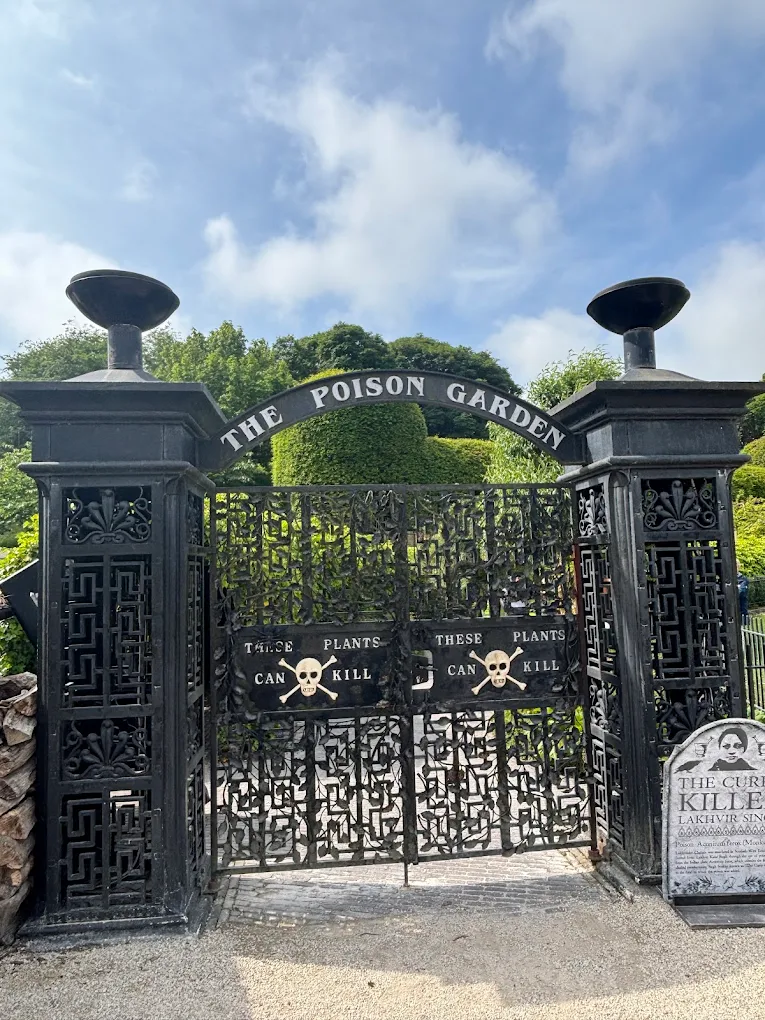
Perhaps the largest such garden is The Poison Garden within the Alnwick Garden in Northumberland, England. It’s said to be one of the deadliest gardens in the world. Visitors are given a safety briefing before entering and gardeners must wear full-body protective clothing.
The Poison Garden is home to around 100 species of dangerous, toxic and harmful plants, each of which has the potential to severely injure you! These are some of the most dangerous to look (but not touch) out for on your tour:
- Laburnum
- Atropa Belladonna
- Helleborus Odorus
- Monkshood
- Ricinus communis
- Giant Hogweed
- Opium Poppy
- Gympie- Gympie
- …And hundreds more
Here’s a sampling from the Tour:
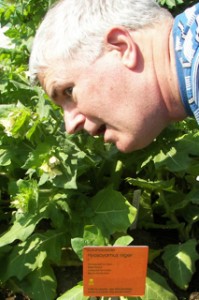
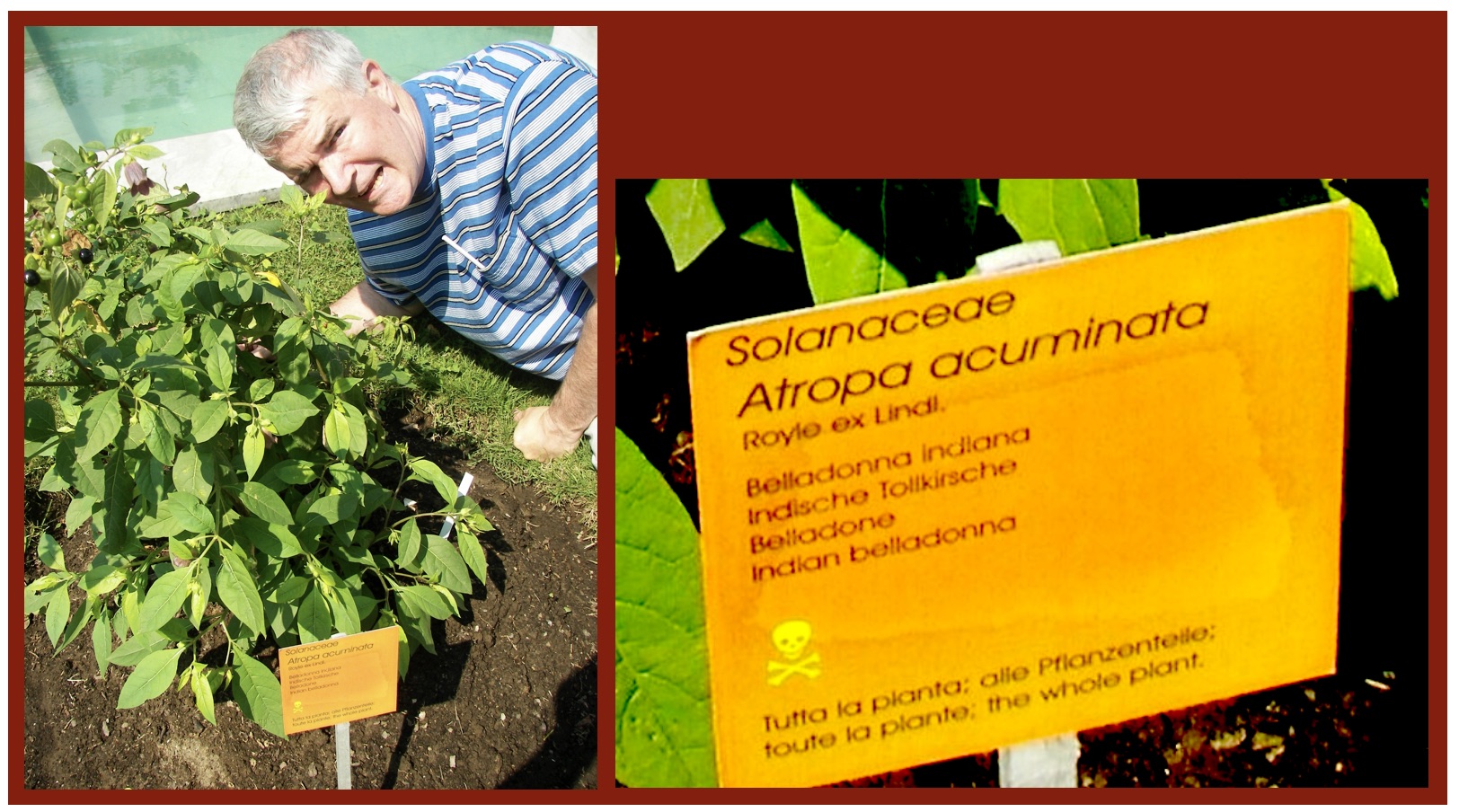
While traveling to the southern border of Switzerland, at Locarno, we discovered a sidetrip to the botanical gardens on the Isole di Brissago [an island accessible by boat from Locarno]. And, within, a much smaller selection of toxic plants in what they call, the “Symbols, myths and magic” area of the garden.
Here I am examining Atropa acuminata (Atropa belladonna). Atropa belladonna, commonly known as deadly nightshade or belladonna, is a toxic perennial herbaceous plant in the nightshade family Solanaceae, which also includes tomatoes, potatoes and eggplant. It is native to Europe and Western Asia, including Turkey, its distribution extending from England in the west to western Ukraine and the Iranian province of Gilan in the east. It has also been introduced in some parts of Canada and the United States.
The foliage and berries are extremely toxic when ingested, containing tropane alkaloids. It can also be harmful to handle or touch these plants. These toxins include atropine, scopolamine, and hyoscyamine, which cause delirium and hallucinations, and are also used as pharmaceutical anticholinergics.
Consumption of Atropa bella-donna has unpredictable effects. The antidote for belladonna poisoning is physostigmine or pilocarpine, the same as for atropine.2
- Chloë Abley, in “A deadly prescription: Shopping for poisons in the Golden Age of Detective Fiction, in Science Museum Group, ” on 23 January 2026.
↩︎ - The last 3 paragraphs about belladonna are from Wikipedia. ↩︎